

When Faith Meets Failure: My Troubling Tirumala Darshan Experience
A Pilgrim's Painful Tirumala Truth
Y Pavan Kumar
7/25/20267 min read
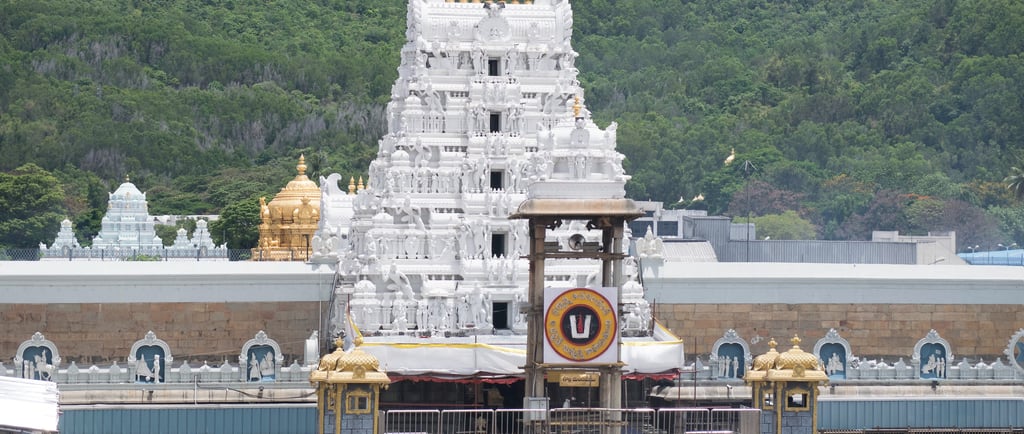
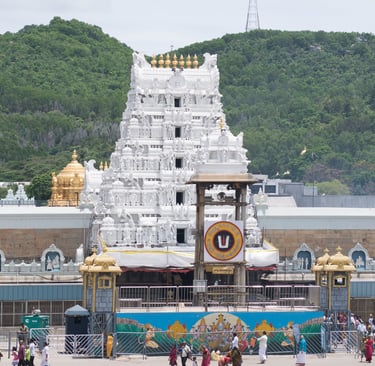
There are journeys you take with your feet, and there are journeys you take with your heart. A trip to Tirumala has always been both for me. I have climbed those hills and stood before Lord Venkateswara more than five times in my life, and every single time, I came back not just spiritually fulfilled, but genuinely impressed by how well the Tirumala Tirupati Devasthanams (TTD) managed the flow of lakhs of devotees.
This time was different. My visit on 21st and 22nd July 2026 left me with an experience I never expected at Tirumala — one marked not by devotion alone, but by confusion, exhaustion, and a system that seemed to have quietly abandoned the pilgrims it exists to serve. I'm writing this account not to vent, but because I believe silence helps no one, and Tirumala is too sacred a place to let its systems slide without anyone noticing.
A Token System That No Longer Exists
The trouble began before I had even started climbing. On previous visits, TTD issued free tokens midway along the Alipiri steps, a simple system that kept pedestrian pilgrims organized and moving as they climbed. It gave people a sense of structure and fairness — you climbed, you got your token along the way, and you knew roughly where you stood in the process.
This time, that system was gone entirely. Instead, tokens are now issued only from the Tirupati Vishnu Nivasam and Bhudevi Complex — locations that pilgrims have to specifically find and travel to, with no clear process or proper approach to guide them there. There was no signage that made this obvious, no clear direction from staff, and no sense that this change had been communicated to the people who actually depend on it. Just obtaining a Sarva Darshan (SSD) token took four to five hours, and the physical climb up the steps hadn't even begun yet. For pilgrims who plan their entire day, sometimes their entire trip, around a predictable token process, this alone threw everything off balance.
Free Luggage Service, Now With a Price Tag
At Alipiri, the luggage system had been changed completely, and not for the better. On earlier visits, staff used to handle the bags for us — tagging them, scanning them, and storing them properly while we made the climb. It was simple, it was reliable, and it was free, exactly as it's meant to be.
This time, the entire process had been made self-service. We had to tie our own bags with a QR code, scan them ourselves, and place them wherever we could find space in the storage area. And it was at the exact moment of scanning — the one interaction where staff were actually involved — that workers openly demanded money. For a service we were now doing almost entirely ourselves, being asked to pay felt not just unfair, but almost absurd.
It got worse on the way back. When it was time to collect our bags after the darshan, there was no one around to help at all. No staff, no system, nothing resembling organization. We had to walk through the entire storage area ourselves, searching bag by bag among hundreds of others until we finally found our own. This isn't a minor gripe — it's a breach of trust. TTD's luggage system has never charged pilgrims, and on my earlier visits, staff handled bags properly both at drop-off and at collection, without expecting a single rupee and without leaving tired, anxious pilgrims to fend for themselves in a sea of identical bags.
One Thing That Still Works: Facilities at the Top
To TTD's credit, once we completed the climb and reached Tirumala, the freshening-up areas and restrooms were clean and well maintained. After a long, difficult climb followed by a frustrating luggage experience, this was a genuine relief, and I want to acknowledge it honestly. I mention this deliberately, too, because it proves the organization is fully capable of doing things right when it chooses to invest in it. Which makes what came next even harder to accept.
A 31-Hour Wait That Made No Sense
This is where the day truly fell apart. We collected our SSD token at 5 AM on 21st July, expecting the kind of wait I'd experienced on past visits. Instead, we were allotted a darshan slot for 12 PM the following day — 22nd July. That's a wait of roughly 31 hours from the moment we got our token to the moment we were scheduled for darshan.
In all my earlier visits, pilgrims who walked the steps typically received darshan within 5 to 8 hours of getting their token. To see that stretch past a full day — for people who had already made the physically demanding climb up the hill on foot — felt both unexplained and unreasonable. No announcement, no signage, and no staff member offered any real explanation for why the wait had grown so dramatically longer than what pedestrian pilgrims have come to expect.
We spent the entire night in the waiting hall, unable to properly rest, and returned to the queue at 5 AM the next morning exactly as instructed, hoping the worst was behind us.
A Queue With No Care in It
It wasn't. Once inside the darshan line, the conditions only got worse. The queue area was visibly unclean, with litter and mess that nobody seemed to be addressing. At no point during our time there did I see any cleaning taking place. In more than five visits to Tirumala over the years, I had never encountered this before — cleanliness has always been one of the things TTD did reliably well.
Past 10 AM, we were still waiting in that same queue, with no food provided at any stage despite the hours already spent standing. Worse still, the staff stationed along the queue largely just sat there. There was little to no engagement with pilgrims — no check-ins, no updates on wait times, no visible sense of responsibility for the thousands of people in their care. It felt less like a managed pilgrimage system and more like a crowd left to manage itself.
Elderly Pilgrims, Left to Fend for Themselves
The hardest part of the entire trip to witness was the elderly pilgrims around us. Many were visibly struggling in the heat and the crush of the crowd — some clearly exhausted, some in obvious discomfort — and at no point did any staff member step in to check on them or offer assistance. I distinctly remember, from earlier trips, how attentive TTD staff used to be with elderly and vulnerable devotees, often helping them find shade, water, or a place to sit. That sense of duty and care felt entirely missing this time, and it was difficult to watch.
Quiet "Recommendations" Cutting the Line
Near the temple, I also noticed people entering through what looked like informal recommendations — bypassing a queue that the rest of us had waited more than a day for. I don't recall seeing this on any previous visit, and it's hard not to feel disheartened watching it happen after waiting so patiently, following every instruction, and standing for hours in an unclean, unattended line. It raises an uncomfortable question about whether the system now works the same way for everyone, or only for those who know the right people.
Prasadam, Cash Only
After finally receiving darshan, we waited nearly four hours just for laddu prasadam — itself a long wait after everything that had already happened. When we reached the counter, we found that only cash payments were accepted, with no digital or traceable payment option available. For an institution as large, well-resourced, and technologically capable as TTD, that alone raises fair questions about transparency in how these transactions are handled.
A Trip That Should Have Been Simple
Looking back at the whole journey, what strikes me most is how many separate systems failed at once, rather than a single isolated mistake. A token system that changed without warning. A luggage process that shifted the burden onto pilgrims while somehow also charging them. A darshan wait that ballooned far past anything I'd experienced before. A queue nobody cleaned. Staff who weren't engaged. Elderly devotees left without support. An informal shortcut for some, while everyone else waited their turn. A prasadam counter that only accepted cash. None of these problems exist in isolation — together, they paint a picture of an institution that has, at least for now, stopped treating the pilgrim experience as its central responsibility.
I don't say this lightly, and I don't say it as someone looking to criticize for the sake of it. I say it as someone who has walked those same steps more than five times, who has felt the relief of finally seeing the gopuram after a long climb, and who has always left Tirumala feeling cared for as much as blessed. That feeling is what was missing this time, and it's worth naming clearly so it can be fixed rather than quietly accepted as the new normal.
Why I'm Writing This
My devotion to Tirumala and to Lord Venkateswara hasn't wavered for a second through any of this. What has been shaken is my confidence in the systems built around it. On every prior visit, I experienced order, dignity, and genuine care from the first step of the climb to the final glimpse of the Lord. This time, nearly every stage — tokens, luggage, wait times, queue conditions, staff attentiveness, and even prasadam distribution — showed a visible, undeniable decline.
Tirumala isn't just a temple for Andhra Pradesh. It's a spiritual anchor for Hindus across India and around the world, carrying a trust that goes far beyond any single administration or election cycle. When its systems fail, it isn't a small inconvenience — it touches the faith of millions who look to this hill as sacred ground, many of whom save for years and travel long distances for a single darshan.
What I'm Asking For
I'd genuinely like to see TTD and the Government of Andhra Pradesh look into a few specific things:
● Restore a fair, transparent token system for pedestrian pilgrims on the steps, with clear signage and communication about any changes.
● Ensure luggage handling stays free of any unofficial charges, with real accountability for staff who demand money — and proper staffing at collection points so pilgrims aren't left searching through bags themselves.
● Investigate why darshan wait times have stretched so far beyond historical norms, especially for pilgrims who've already completed the physical climb.
● Maintain cleanliness and basic dignity in the queues, with regular, visible upkeep throughout the day.
● Station staff who are actively present and attentive — especially toward elderly and vulnerable pilgrims who may need help.
● Close off any informal channels that let people bypass the queue ahead of those who've waited their turn honestly.
● Introduce transparent, traceable payment options at prasadam counters, in line with what a modern, well-run institution should offer.
Tirumala's prestige has always rested on one simple promise: every pilgrim, regardless of status or connections, is treated with equal care. I hope this account is read in that spirit — not as criticism for its own sake, but as an honest appeal from a devotee who wants Tirumala's systems to live up to the sanctity of the place itself.
I still plan to return to Tirumala, because my faith isn't tied to how one visit unfolded. But I sincerely hope that the next time I climb those steps, I find the Tirumala I remember so fondly from before — organized, caring, and fully worthy of the deep trust that millions of devotees continue to place in it, year after year, generation after generation, without ever once needing to seriously question it at all.
Govinda Govinda.
LoopNiche
An independent journal of ideas, policy, and progress.
Home-About-Blog-Categories-Contact
Correspondence
pavanpavantejy@gmail.com
Phone: 6303482963
S.V. University Alumnus
© 2026 LoopNiche-Independent analysis of India's structural architecture.
LOOPNICHE DIGITAL JOURNAL